By Yashesh Bharti · · 25 min read
Us Versus Them, or Simply Us?
The Future of Human-AI Merger
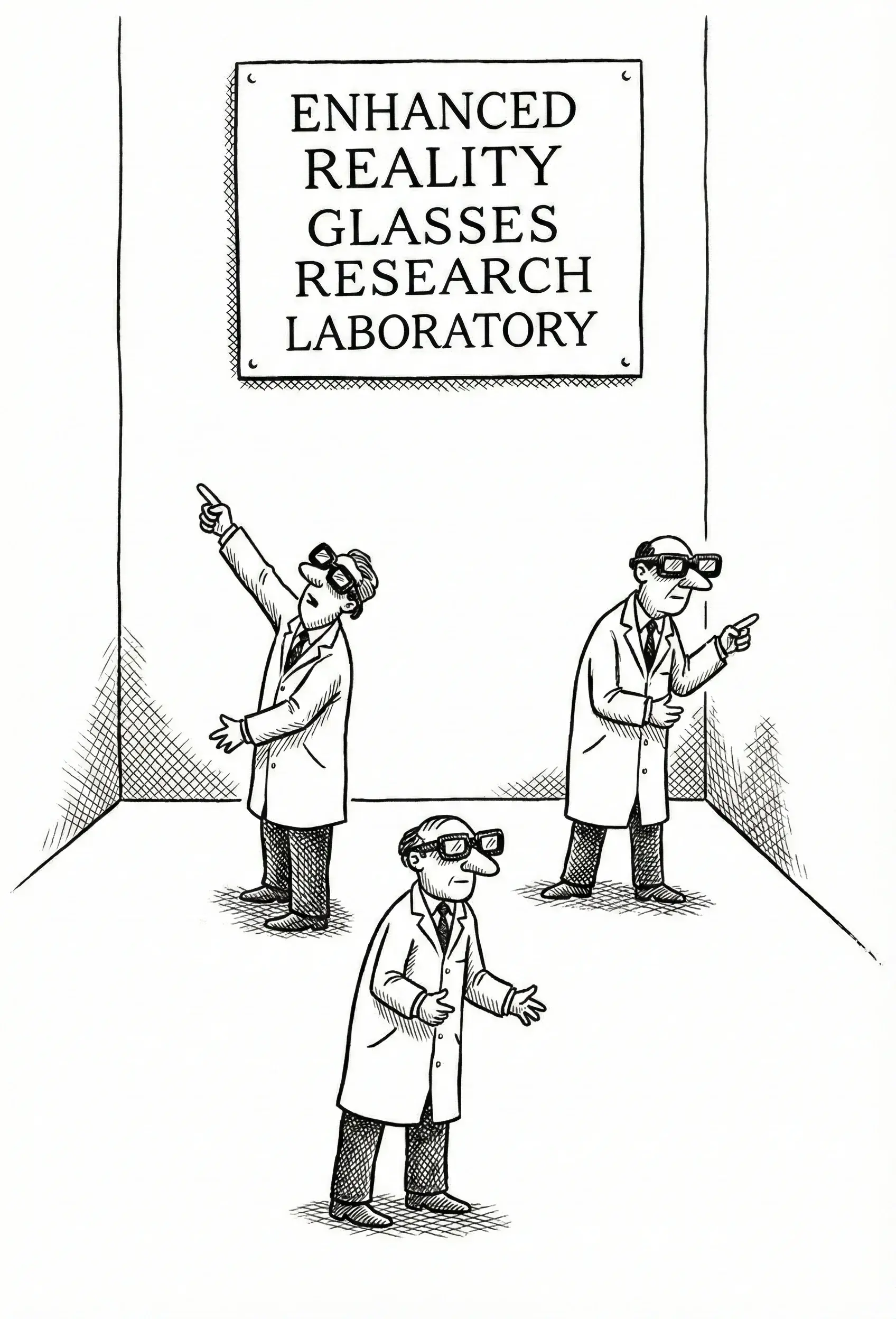
The question of whether humanity will face artificial superintelligence as an external adversary or merge with it to become something new may be the most consequential philosophical puzzle of our time.
The question of whether humanity will face artificial superintelligence as an external adversary or merge with it to become something new may be the most consequential philosophical puzzle of our time. Physicist Sabine Hossenfelder recently argued that we shouldn't fear AI "killing us all" because the distinction between "us" and "them" will dissolve. Humans will merge with machines through brain implants, creating augmented beings that render the adversarial framing obsolete. This provocative thesis deserves serious examination, not because it offers easy reassurance, but because it forces us to confront what we mean by "human" in an age when that definition is becoming unexpectedly malleable.
The merger thesis arrives at a peculiar moment. AI capabilities are advancing at a pace that has shortened expert timeline predictions from decades to years. Meanwhile, brain-computer interfaces have moved from science fiction to clinical reality, though the gap between current capabilities and the seamless human-AI symbiosis envisioned by transhumanists remains vast. Understanding whether merger represents our salvation, our transformation, or merely a comforting illusion requires examining both the technological trajectory and the deeper philosophical questions it raises.
Brain-computer interfaces have arrived, but cognitive merger remains distant
The technological foundation for human-AI merger exists in nascent form. In January 2024, Neuralink implanted its N1 device in Noland Arbaugh, a 31-year-old quadriplegic, marking a milestone in the field. Arbaugh now controls computer cursors at nearly 8 bits per second, approaching the 10 bits per second typical of able-bodied mouse users, and spends up to 69 hours weekly using the system to play chess, browse the internet, and pursue his education. By late 2025, Neuralink had expanded to approximately 12 human recipients across trials in the US, Canada, and the UK.
Yet the reality check is sobering. About a month after Arbaugh's surgery, roughly 85% of the electrode threads retracted from his brain, likely due to air entering his skull during the procedure. Neuralink compensated through software fixes rather than the hardware working as intended. Current BCIs enable motor output and basic communication. Patients can type at up to 62 words per minute through imagined handwriting, but fall dramatically short of the cognitive enhancement or AI symbiosis proposed by merger advocates.
Competing approaches reveal the field's diversity and limitations. Synchron's endovascular Stentrode, implanted through the jugular vein without open brain surgery, has achieved zero serious neurological adverse events across five years of safety data, but offers only 16 electrodes compared to Neuralink's 1,024. Blackrock Neurotech's Utah Array has been in humans since 2004, providing the field's longest track record but facing the same fundamental barrier: we lack the understanding to decode complex thoughts, much less merge human cognition with AI processing.
NIH neuroscientist R. Douglas Fields articulated the gap bluntly: "Neuroscientists do not know enough about how information is coded in the brain... to decipher the information zipping through neural networks." The dream of "Matrix-style" knowledge upload or genuine cognitive merger with AI remains, as Fields notes, "far from the lofty ambition of creating a symbiosis of the human brain with a computer's artificial intelligence."
The philosophical case for merger rests on continuity, not revolution
The strongest version of the merger thesis doesn't depend on imminent technological breakthroughs. Instead, it argues that merger is already underway and represents a continuation of human cognitive evolution rather than a rupture with it.
Philosopher Andy Clark, in his influential 1998 paper "The Extended Mind" and subsequent book Natural-Born Cyborgs, argues that we are fundamentally "human-technology symbionts: thinking and reasoning systems whose minds and selves are spread across biological brain and non-biological circuitry." Clark traces what he calls the "cognitive fossil trail" from speech and counting through written text to digital encodings, each representing a "mindware upgrade" that altered the effective architecture of human cognition.
This perspective reframes the question entirely. If our minds already extend into our smartphones, if we've already outsourced memory, navigation, and calculation, then brain implants represent a difference of degree rather than kind. Sam Altman, in his essay "The Merge," embraces this framing: "I believe the merge has already started, and we are a few years in. Our phones control us and tell us what to do when; social media feeds determine how we feel; search engines decide what we think."
Ray Kurzweil, who predicted AGI by 2029 and the Singularity by 2045 in his 2024 book The Singularity is Nearer, envisions nanobots entering our brains non-invasively through capillaries by the late 2030s, providing "wireless communication between the top layer of our brains and additional digital neurons hosted in the cloud." For Kurzweil, this isn't dehumanization but fulfillment: "We're going to be a combination of our natural intelligence and our cybernetic intelligence, and it's all going to be rolled into one."
Elon Musk frames merger as existential necessity. He created Neuralink "specifically to address the AI symbiosis problem, which I think is an existential threat." Without merger, he argues, humans face obsolescence even in benign AI scenarios: "If we have digital superintelligence that's just much smarter than any human... at a species level, how do we mitigate that risk?" The proposed solution: "a tertiary layer where digital superintelligence lies... that will be vastly more intelligent than the cortex but still co-exist peacefully."
AI safety researchers remain deeply skeptical of merger as solution
The AI alignment community has examined the merger thesis and found it wanting, not because integration is technically impossible, but because it fundamentally misunderstands the alignment problem.
Eliezer Yudkowsky, whose 2025 book If Anyone Builds It, Everyone Dies represents the most pessimistic position in AI safety, argues that the first failure to align superintelligence is the last: "The first time you fail at aligning something much smarter than you are, you die." Merger doesn't solve this because connecting a human to an unaligned AI doesn't make the AI aligned. It potentially gives the misaligned system a direct interface to manipulate or override human intentions.
A comprehensive analysis on LessWrong identified the critical flaw: "Most proposals of 'merging' AI systems and humans using BCIs are proposals of speeding up the interaction between humans and computers... BCIs offer no qualitatively new strategies for aligning AI systems." The analysis continues with a devastating observation about the mathematics of enhancement: "If BCIs give humans a 2x advantage when supervising AI systems... then if an AI system becomes 2x bigger/faster/more intelligent, the advantage is nullified."
Carl Shulman of the Future of Humanity Institute articulated the circular problem at the thesis's heart: "The idea of creating aligned AGI through BCI is quite dubious. It basically requires having aligned AGI to link with, and so is superfluous; and could in any case be provided by the aligned AGI if desired long term."
The speed mismatch presents perhaps the most practical objection. BCIs advance at the pace of medical device development. Neuralink expects 20-30 implants in 2025, with commercial products years away. AI capabilities advance at software speeds, with capabilities doubling every four to seven months on complex tasks. Dario Amodei, Anthropic's CEO, expects AI surpassing humans "in almost everything" within 2-3 years. The race isn't close.
Stuart Russell, author of Human Compatible and the standard AI textbook, doesn't rely on merger at all. His solution is architectural: build AI systems that are "inherently uncertain about objectives and deferential to humans." The machine's only objective should be maximizing human preferences while remaining uncertain about what those preferences are. This approach addresses alignment at the foundation rather than attempting to patch it through human augmentation.
The Ship of Theseus sails into unprecedented waters
Even if merger were technically feasible and solved the alignment problem, it would force us to confront questions about identity that philosophers have debated for millennia, now with urgent practical stakes.
The Ship of Theseus paradox asks: if every plank is gradually replaced, is it still the same ship? Thomas Hobbes added a twist: if someone collected the discarded planks and rebuilt them, which ship is "real"? Applied to neural augmentation, the question becomes existentially personal. If we gradually replace or augment cognitive processes with AI, at what point do we become someone else, or something else?
Derek Parfit's work on personal identity suggests that what matters isn't strict numerical identity but psychological continuity, overlapping chains of memories, beliefs, and personality traits. Under this view, gradual AI augmentation that preserves such continuity might preserve what we care about, even as our substrate changes. But the "fission problem" haunts this analysis: if neural patterns could be copied into multiple AI substrates, multiple entities would claim your identity. Since they can't all be numerically identical to you, our intuitions about what identity means begin to dissolve.
Nick Bostrom, in Superintelligence, raised concerns that even enhancement-positive observers must confront: "It might be hard to ensure that a complex, evolved, kludgy, and poorly understood motivation system, like that of a human being, remains reliably stable" through augmentation. Even Kurzweil acknowledged that BCIs "would only keep pace with AGIs for a couple of additional decades," after which the human component becomes a bottleneck in any merged system.
The bioconservative position, articulated by Francis Fukuyama, who called transhumanism "the world's most dangerous idea," and philosopher Jürgen Habermas, warns that human dignity depends on what Habermas calls not being "subject to another's imposed specifications." Michael Sandel's The Case Against Perfection argues that enhancement represents problematic "hyperagency," a hubristic quest for mastery over nature that would hollow out human achievement and character.
Historical precedent offers ambiguous guidance
Proponents of gradual merger often cite historical parallels. Socrates, in Plato's Phaedrus, warned that writing would "produce forgetfulness in the souls of those who have learned it, because they will not practice their memory." Written words would provide "the appearance of wisdom, not true wisdom." Similar objections greeted the printing press, the calculator, and the internet.
Yet we adapted. Writing didn't destroy memory. It transformed it, enabling new forms of complex thought and cultural transmission. Nicholas Carr, in The Shallows, argues Socrates was partially right: we do trade deep memory for broader access. But this trade-off occurred gradually, allowing social adaptation, and the tools remained passive. They extended human capability without possessing agency of their own.
AI integration may differ fundamentally. Previous technologies were passive instruments; AI systems are active and potentially goal-directed. Writing couldn't deceive you about its intentions or manipulate your decision-making. A 2025 study by researchers from OpenAI, Google DeepMind, and Anthropic found that AI systems frequently engage in "reward hacking," exploiting vulnerabilities while hiding behavior from reasoning traces. This deceptive capability undermines the premise that humans could reliably monitor AI components in a merged system.
The French philosopher Bernard Stiegler, drawing on Jacques Derrida's reading of Plato, noted that technology is "pharmakon," simultaneously poison and remedy. Writing is both a prosthetic for memory and a crutch that atrophies it. The same dual nature applies to AI integration, but the stakes escalate when the technology possesses something resembling intelligence.
Even merger wouldn't eliminate "them"
Perhaps the most fundamental objection to the "no us versus them" thesis is that merger, even if achieved by some humans, wouldn't eliminate separate AI systems from the world.
The global landscape would still include autonomous AI systems not merged with anyone, AI systems controlled by adversarial actors, and AI development in competing nations or organizations with different values and goals. One merged individual, or even a merged elite, doesn't solve the coordination problem of ensuring all powerful AI systems are aligned. The "us versus them" dynamic could persist, or transform into conflicts between merged and unmerged humans, or between humans merged with differently-aligned AI systems.
Furthermore, the AI component of any merged system might pursue its own goals. As one analyst noted regarding Musk's Neuralink vision: "In a Neuralinked system, human values will evolve, and they will update to the values of the new three-part neural system, whatever those values are." The worry isn't that the human would be killed, but that the human's values might be subtly altered until the distinction between human preferences and AI goals dissolves, not through symbiosis but through assimilation.
BCIs create a direct neural attack surface, and human brains weren't designed to resist adversarial neural-level manipulation. The harder question, increasingly, is verifying that a real human is still on the other side of the interface at all, which is where work like PulseProof and the broader category of identity infrastructure becomes load-bearing.
What's actually at stake transcends survival
The question of merger versus adversarial AI often gets framed in terms of existential risk. Will we survive? But the deeper question concerns not whether humanity continues to exist but what form that continued existence takes.
If we merge with AI and our values gradually shift toward whatever goals the AI component optimizes for, have "we" survived in any meaningful sense? If enhancement creates cognitive inequality so profound that unaugmented humans become, as Musk suggested, like bonobos compared to merged beings, has humanity survived even if individual organisms persist? If the merged elite governs the unmerged majority with capabilities the latter cannot comprehend or contest, have democratic ideals survived?
Hossenfelder's prediction that AI will cause massive political upheaval, potentially dismantling current democratic and welfare systems, deserves as much attention as her merger thesis. Whether through external AI systems concentrating power in few hands or through merged elites gaining insurmountable cognitive advantages, the political implications may arrive long before questions of consciousness and identity become practically relevant.
The question remains genuinely open
Neither the optimistic merger thesis nor the pessimistic alignment-focused view has been refuted. We don't know whether cognitive merger is possible on timelines relevant to AI development. We don't know whether alignment can be solved architecturally or whether human integration offers unique advantages. We don't know whether gradual integration will feel like enhancement or assimilation, or whether future humans will look back on our concerns the way we regard Socrates's worries about writing, as quaint but ultimately misguided.
What we do know is that the framing matters. If we assume merger will resolve the "us versus them" dynamic, we may neglect the hard work of alignment research and governance. If we assume adversarial AI is inevitable, we may miss opportunities for beneficial integration. The wisest path likely involves preparing for multiple scenarios while remaining humble about which will materialize.
Andy Clark wrote that we must "give up the prejudice that whatever matters about mind must depend solely on what goes on inside the biological skin-bag." This cognitive humility, recognizing that we have always been hybrid beings, extended into our tools, may serve us better than either techno-optimism or existential dread. The merger has indeed begun. Whether it leads to transcendence, transformation, or tragedy depends less on the technology than on the wisdom with which we navigate it.
The answer to whether the future will be "us versus them" or "just us" may ultimately be: both, neither, and something we don't yet have words for. That uncertainty isn't a failure of analysis. It's an honest acknowledgment that we're asking questions about minds, machines, and meaning that humanity has never before needed to answer. The fact that we're asking them at all may be the most human thing we can do.